
What Is the Safest Type of Outdoor Grill?
The safest outdoor grill is the model that matches the fuel supply, kitchen layout, ventilation plan, local rules, and intended use. A gas grill may suit one outdoor kitchen. An electric, charcoal, or pellet grill may fit another. The phrase best outdoor grills for outdoor kitchen projects calls for a specification review. It does not establish a universal ranking.
For B2B buyers, safety starts before the quotation. Confirm the exact model, fuel type, installation method, cabinet dimensions, operating instructions, cleaning process, and documents available for the destination market. Product-level details control the final decision.
What Makes an Outdoor Grill Safe?
An outdoor grill needs a stable structure and a clear operating area. The installation must leave the access, service, and ventilation points described in the product instructions. Heat-producing equipment also needs separation from materials and items that the installation guide identifies as unsuitable.
Fuel and connection parts must match the selected model. Gas grills require the correct canister or supply connection, hose, regulator, and regional adapter where applicable. Electric grills require an outdoor-appropriate power arrangement. Charcoal and pellet grills require a safe place for hot ash, embers, or fuel residues.
Cleaning is part of the safety specification. Grease, ash, and food residue need to be handled according to the product instructions. A buyer should ask how the cooking surface, grease tray, burner area, fire pot, or ash container is accessed and maintained.
Which Grill Type Is Safest for an Outdoor Kitchen?
Gas Grills
Gas grills offer direct ignition and adjustable heat control. The safe choice depends on the fuel listed for the model and the connection arrangement at the destination. Joye Leisure’s source material lists propane and butane canisters for Europe and Australia with regional adapters; buyers should confirm the exact grill and market before publication or ordering.
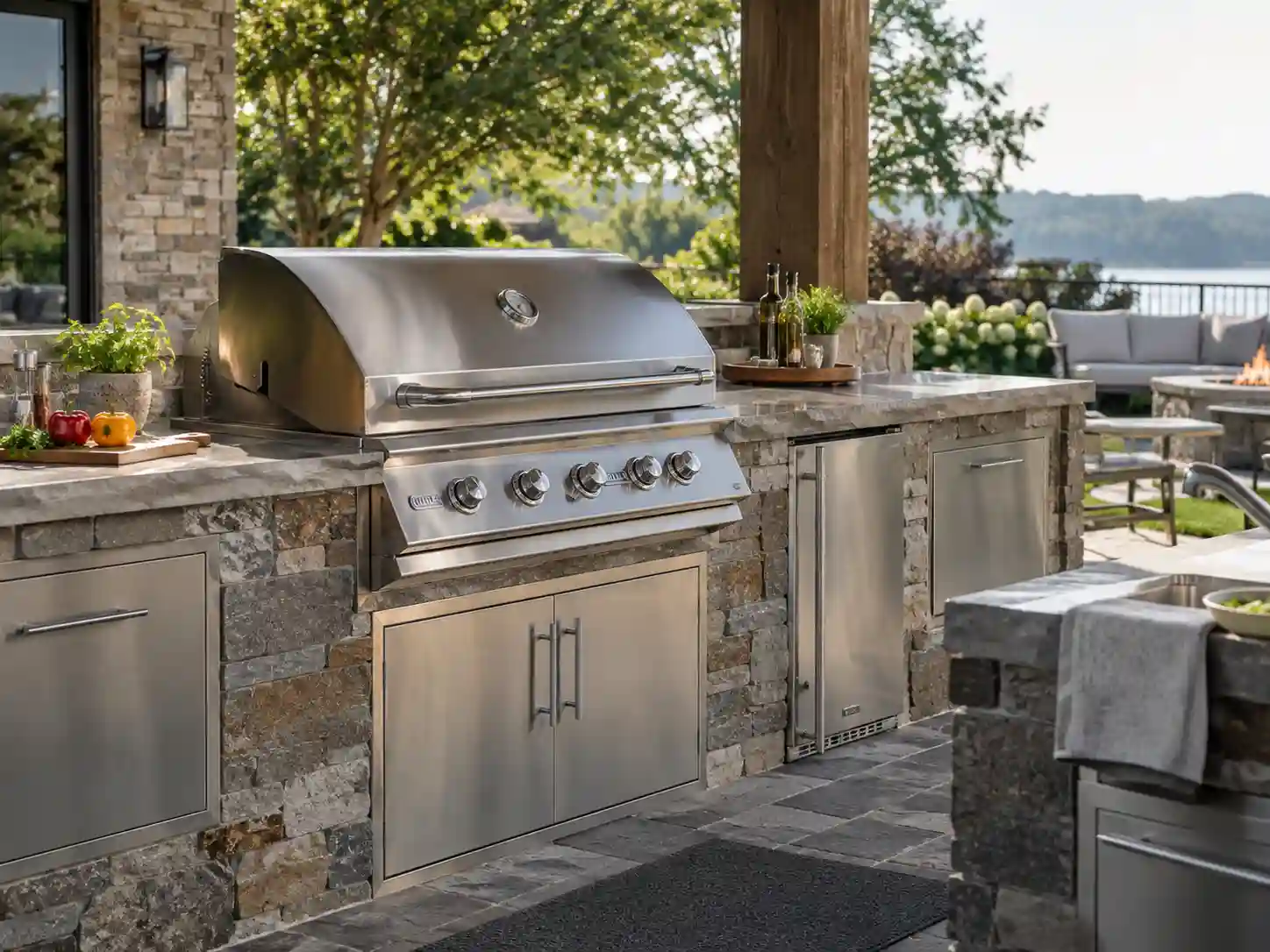
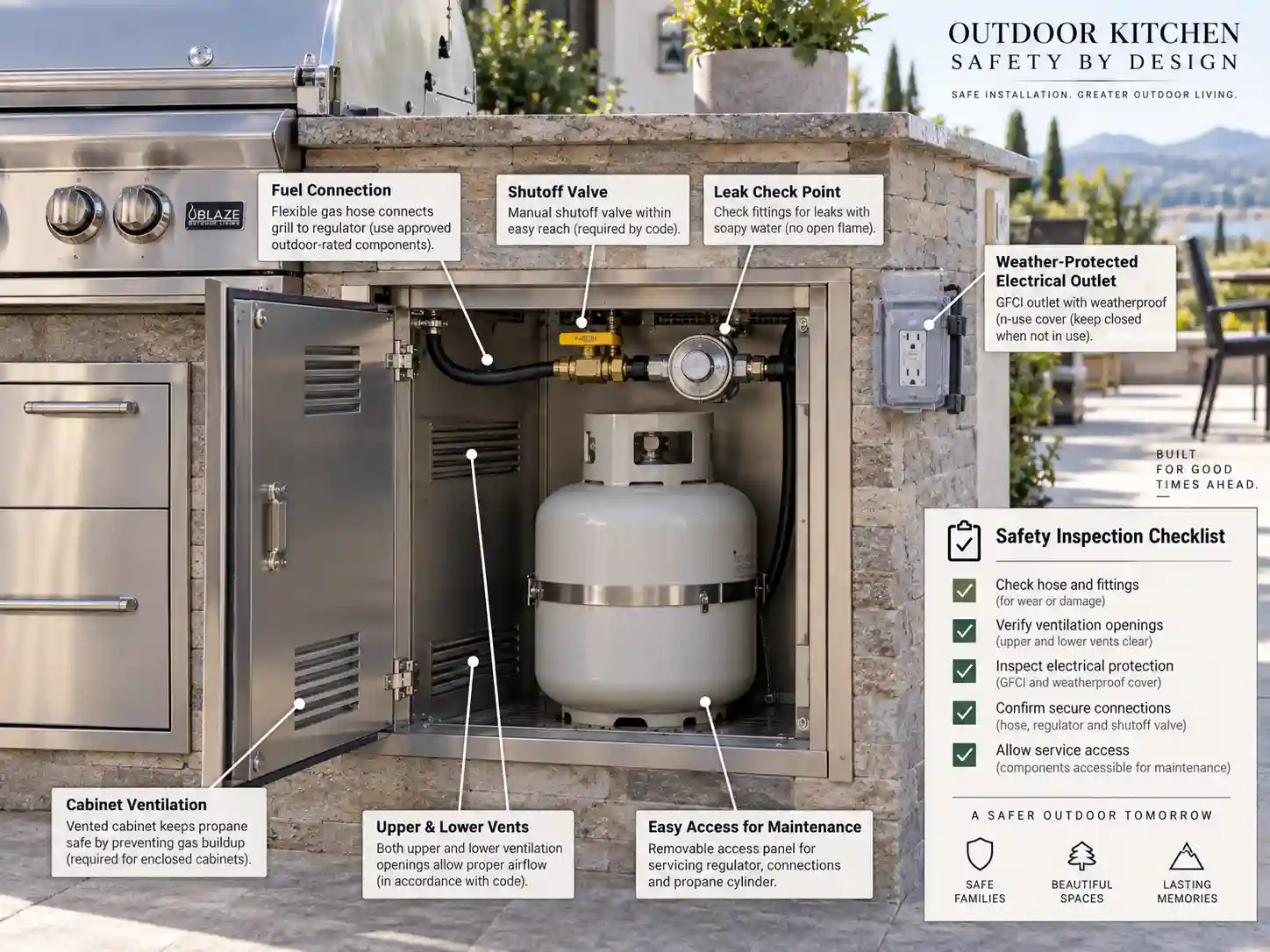
Built-in gas grills need a cabinet and countertop plan that follows the product manual. Confirm ventilation openings, service access, hose routing, shut-off access, and the space around the heat source. Do not assume that a cabinet designed for storage is suitable for a grill installation.
Electric Grills
Electric grills remove the fuel-canister question, but they still need a suitable outdoor power arrangement. Check the rated voltage, plug, cable route, socket location, grounding, and moisture protection for the destination market. “No open flame” does not remove heat, electrical, or grease-management requirements.
Electric models can suit projects where the site already has an approved power supply. The final choice belongs to the site plan and the model documentation.
Charcoal Grills
Charcoal grills use live fuel, hot cooking surfaces, embers, and ash. The operating area must support safe lighting, supervision, cooling, and ash disposal. A charcoal grill should stay in a well-ventilated outdoor setting, away from materials that the product instructions identify as combustible. The National Fire Protection Association grilling guidance is a useful external safety reference for general handling boundaries.
Ask how the grill handles ash and whether the cooking chamber, vents, lid, and base require special cleaning. The source material references EN 1860 for charcoal grills; request current model documentation before making a market-specific compliance statement.
Pellet Grills
Pellet grills combine a solid fuel with an electrical feed and combustion system. Buyers should check the specified pellet type, hopper protection, power requirements, ignition sequence, and shutdown process. Pellets need storage conditions that keep them suitable for the selected model.
The fire pot and grease path require regular care. Ask for the cleaning frequency and access points in the manual. A pellet grill belongs in a layout that leaves room for operation, inspection, and service.
Outdoor Grill Safety Comparison
| Grill type | Main safety controls | Installation checks | Maintenance focus |
|---|---|---|---|
| Gas | Correct fuel, regulator, hose, ignition, shut-off | Cabinet ventilation, connection route, service access | Burner area, grease tray, cooking surface |
| Electric | Rated power, grounding, cable and socket protection | Outdoor power point, cable route, moisture boundary | Heating surface, grease management, cable condition |
| Charcoal | Supervision, ember control, cooling and ash handling | Open-air placement, stable base, clearance | Vents, cooking chamber, ash container |
| Pellet | Correct pellets, feed system, ignition and shutdown | Power, hopper access, service clearance | Fire pot, grease path, hopper and exhaust |
The table identifies questions for a product brief. It does not establish one fuel as the safest option for every site.
How to Choose the Best Outdoor Grills for Outdoor Kitchen Projects
Start with the application. A private garden, hotel terrace, restaurant, resort, campsite, and retail display can need different layouts and operating routines. Record who will use the grill, how often it will operate, which fuel is available, and who will clean it. This application record makes the best outdoor grills for outdoor kitchen comparison specific to the project.
Then match the grill to the kitchen components. Check the countertop opening, cabinet structure, nearby sink, storage, preparation area, seating route, and service access. The grill should fit the planned workflow and leave doors and maintenance points clear.
For a global programme, state the destination market at enquiry stage. Fuel connectors, voltage, product documents, and compliance requirements vary by product type and sales market. Joye Leisure can review outdoor kitchen and BBQ products through its outdoor living range, subject to model confirmation.
Built-In Grill Safety and Outdoor Kitchen Layout
Built-in equipment needs a measured opening and a defined support structure. Provide the grill dimensions, countertop material, cabinet drawings, ventilation plan, and access arrangement before production or installation. A supplier cannot confirm fit from a product category name alone.
Keep fuel, cleaning chemicals, and packaging materials in locations allowed by the installation instructions. Gas cylinders, where used, need a storage and connection plan that matches the model and local requirements. Electrical cables should follow the specified route and remain accessible for inspection.
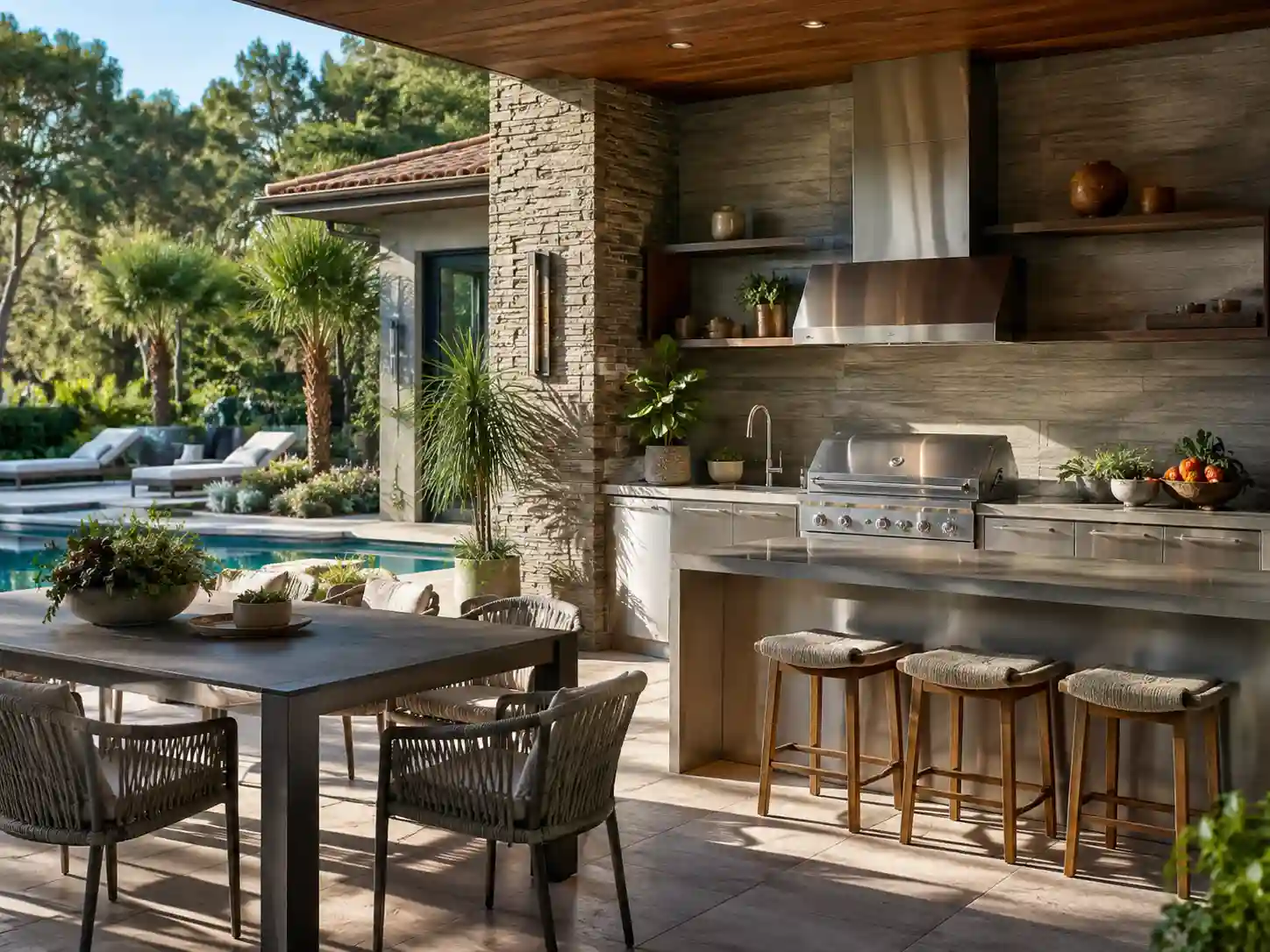
The operating zone also matters. Leave room for opening the lid or door, placing hot cookware, and moving around the kitchen. A compact layout can still work when the clearances and service points are documented. Buyers can compare related outdoor furniture categories when planning seating, tables, and storage around the cooking area. These details belong in a best outdoor grills for outdoor kitchen brief.
Safe Operation Before, During, and After Cooking
Before lighting or switching on, inspect the cooking area, fuel or power connection, grease path, and surrounding space. Remove items that the manual identifies as unsuitable. Check that the grill sits securely and that required vents are open.
During cooking, keep the grill attended. Follow the model’s ignition, temperature, and shutdown instructions. Keep children and visitors away from the operating zone, especially when the lid, handles, trays, or cooking surfaces are hot.
After cooking, close the fuel supply or switch off the power as instructed. Allow hot parts and ash to cool through the documented process. Clean the areas named in the manual before covering, storing, or servicing the grill.
What B2B Buyers Should Ask an Outdoor Grill Supplier
Ask for the exact model number, fuel type, dimensions, installation method, and operating manual. Request the connection requirements and the parts supplied with the grill. For a built-in model, ask for the cut-out, ventilation, support, and service-access details.
The destination market should appear on the enquiry. Ask which documents and test reports are available for the selected product. Joye Leisure’s contact team can review a product list with the target market, application, packaging needs, and requested document scope.
For private-label projects, add logo position, carton markings, quantities, assembly preference, and spare-part requirements. MOQ, finish, packaging, and logistics terms require quotation confirmation. Avoid publishing a certification or fuel compatibility statement until the current model documents support it.
How Joye Leisure Supports Outdoor Kitchen Sourcing
Joye Leisure’s product portfolio includes outdoor kitchens, cabinets, racks, BBQ grills, fire pits, and related outdoor-living products. The company describes wholesale, chain-store, and applicable OEM/ODM private-label cooperation. Product specifications, tests, and compliance documents remain model-specific.
The source material describes packaging support and KD construction for applicable products. It also describes FCL and LCL shipment options from Chinese ports, with FOB as the usual term. DDP may be offered for Europe and Australia after destination and quote confirmation. Product care and service questions can be directed through the Joye Leisure service page after the model is confirmed.
Conclusion
The safest outdoor grill is the one specified for the site, fuel, layout, operator, cleaning routine, and destination-market requirements. Gas, electric, charcoal, and pellet models each create a different set of checks.
For the best outdoor grills for outdoor kitchen projects, build the product brief before comparing models. Confirm the installation drawing, fuel or power arrangement, ventilation, maintenance instructions, documents, packaging, and quotation scope with the supplier.
FAQ
What is the safest type of outdoor grill for a home outdoor kitchen?
There is no single safest type for every home. Match the grill to the available fuel or power, outdoor ventilation, layout, installation instructions, and the user’s ability to maintain it. That is the practical test for the best outdoor grills for outdoor kitchen use.
Are electric grills safer than gas grills outdoors?
Electric grills remove the gas connection and canister from the specification. They still involve heat, grease, electricity, grounding, and moisture controls, so the model and site requirements must be checked together.
Can a gas grill be installed inside an outdoor kitchen cabinet?
Only when the selected built-in model and cabinet design allow that installation. Confirm the required ventilation, clearances, support, hose routing, and service access in the product documentation.
How much ventilation does an outdoor grill need?
Use the ventilation dimensions stated in the exact product manual and local installation rules. A general figure cannot be applied safely to every fuel type, cabinet, or market.
What documents should buyers request from an outdoor grill supplier?
Request the model manual, specification sheet, installation requirements, fuel or electrical information, and applicable test or compliance documents. The available document scope varies by product type and sales market.
How often should an outdoor grill be cleaned?
Follow the cleaning intervals and access instructions for the selected model. Clean grease, ash, cooking surfaces, and combustion areas as directed, and inspect the grill before the next use.